
Reflective Supervision
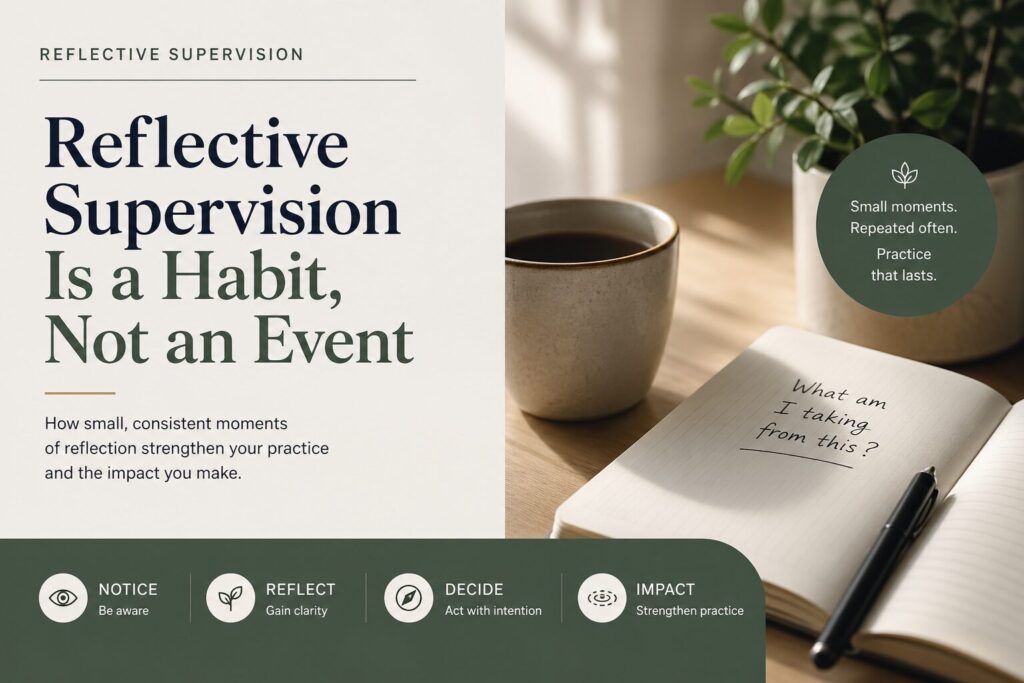
Reflective Supervision Is a Habit, Not an Event
Reflection in supervision is often treated as something we do in sessions. But meaningful change happens when reflection becomes part of everyday practice, small, consistent, and embedded into how we work.
The Gap Between Knowing and Doing
Most practitioners understand reflection: pause, consider, weigh decisions. Yet under
pressure, it is often the first thing to drop, not because it isn’t valued, but because it isn’t embedded.
A Practical Approach to Embedding Reflection
Drawing on principles from James Clear, change is more reliable when it is small,
repeatable, and built into existing behaviour. In supervision, reflection does not need to be extensive, it needs to be consistent.
Four Ways to Strengthen Reflective Practice
1. Build the Pause Into the Work
Attach reflection to what already happens. After a session, pause briefly. While writing
notes, include one reflective question. Before responding, take one breath. Reflection
becomes part of the workflow, not an addition.
2. Keep It Simple
Reduce reflection to one question: What stands out? What matters here? What am I
noticing? Depth is not required for usefulness.
3. Link It to Existing Routines
Use what is already consistent. After a difficult interaction, ask: What am I carrying? At
the end of the day: What did I learn? This removes the need for motivation.
4. Focus on Awareness, Not Accuracy
Reflection is not about getting it right. It is about noticing uncertainty, emotional load,
assumptions, and limits. Small awareness shifts thinking.
From Activity to Identity Effective supervision is not built on occasional reflection. It develops when practitioners see themselves as people who reflect as part of their practice, not perfectly, but consistently.
A Practical Starting Point
At the end of your next session, ask: What am I taking from this? No analysis required.
Just notice.
Closing Reflective supervision is built in the pause before action, the internal question, and the moment of awareness. Small, consistent acts of reflection are where practice changes.