The House of Relationships
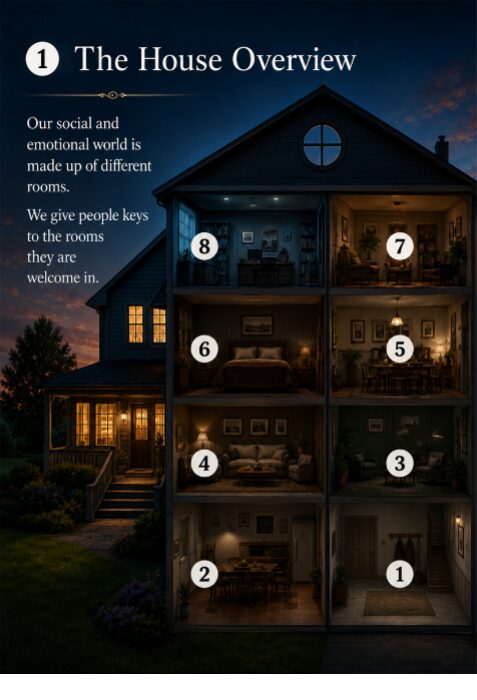
Every person carries within them an invisible house. It is not made of bricks and
timber, but of memories, relationships, trust, emotions, experiences, and personal
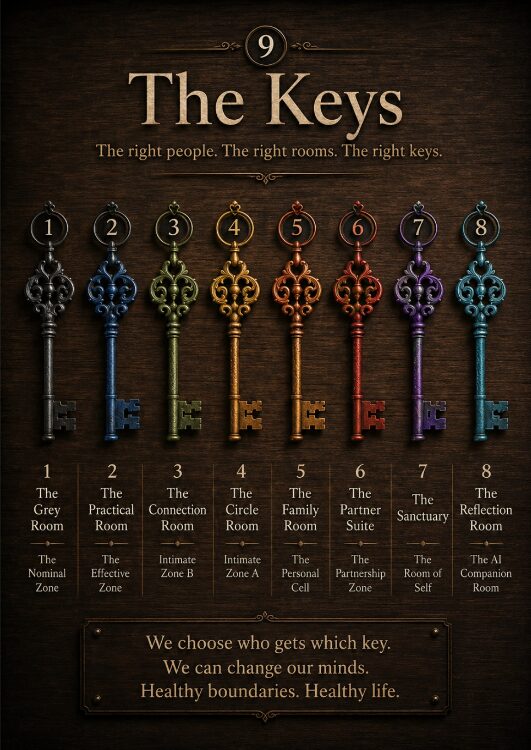
values. Throughout life we hand out keys to different rooms in this house.
Some people only ever enter the front hallway. Others are welcomed much further
inside. Problems often occur when we give someone a key they have not earned, or
when we continue allowing someone access to a room that no longer reflects the
relationship.
Healthy relationships require us to occasionally review who holds which keys.
Sometimes people are upgraded. Sometimes they are downgraded. And sometimes
their key needs to be returned altogether.
Room 1 – The Grey Room – The Nominal Zone
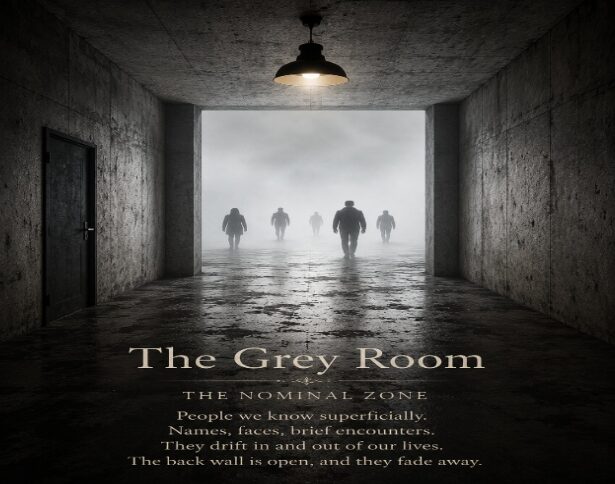
This room is large but very plain. Grey walls. Concrete floors. No decorations.
It contains people we know only superficially. Perhaps we know their name. Perhaps
we have met them once or twice. Neighbours. People from a course. Someone we
chatted to at a conference. The back wall of this room is open. People drift in and out
constantly.
That is why when we unexpectedly meet someone from years ago, we may
recognise their face but struggle to remember their name. They have slowly drifted
out through the back of the room.
No emotional investment is required here.
Room 2 – The Practical Room – The Effective Zone
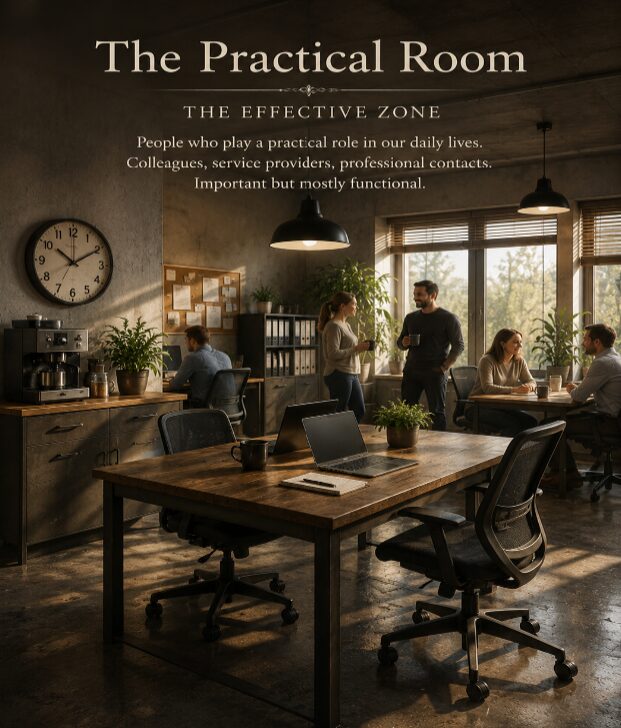
This room is brighter and more functional.
There are chairs.
A coffee machine.
Perhaps a desk.
These are people who play a role in our daily lives. Work colleagues. Service
providers.
Professional contacts. People who help us get things done.
We may spend considerable time with them. Yet if circumstances change and we
never see them again, our lives continue much the same. The relationship is
valuable but primarily practical.
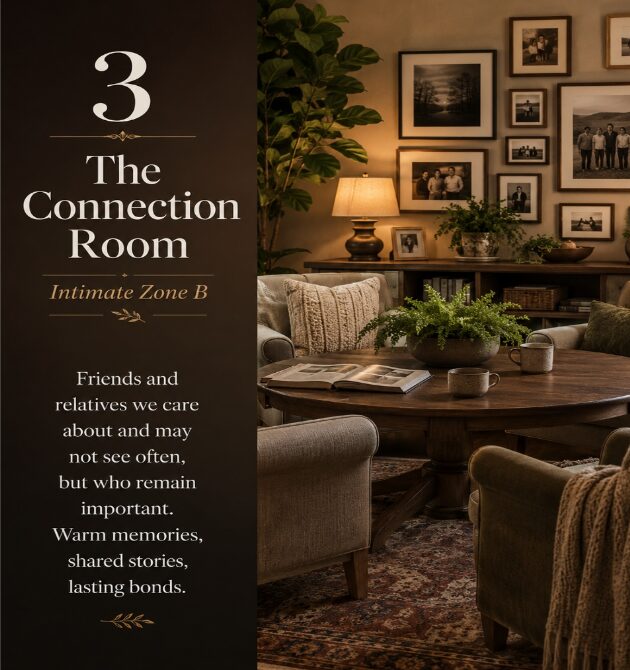
Room 3 – The Connection Room – Intimate Zone B
This room feels warmer. There are comfortable lounges.
Plants.
Photographs.
A table where people gather and share stories.
These are people who matter emotionally. Old friends. Extended family. Relatives we
may not see often but who remain important. Months or even years may pass
without contact.
Yet when we reconnect, it feels as though little time has passed. The relationship is
maintained more through affection than frequency.
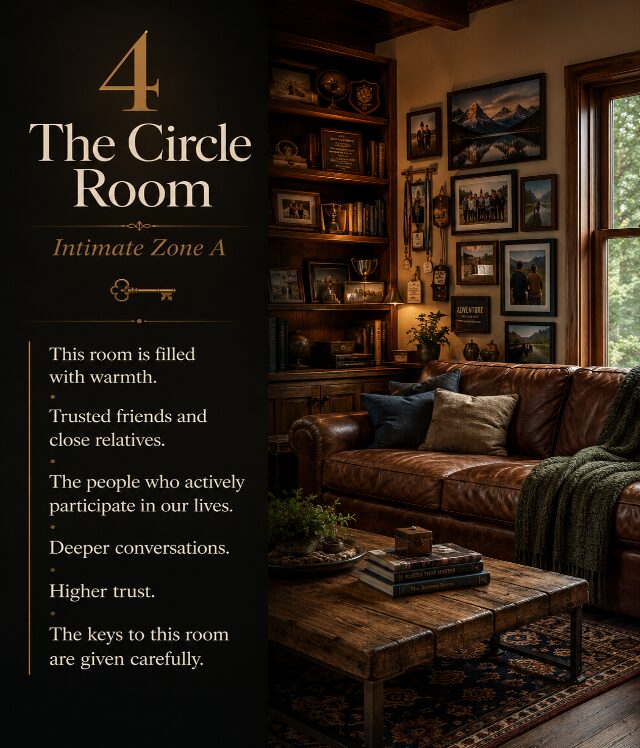
Room 4 – The Connection Room – Intimate Zone A
This room is filled with warmth. The furniture is strong and enduring.
The walls display photographs, souvenirs, and reminders of shared experiences.
These are the people who actively participate in our lives. These are the people who
know your history. Trusted friends. Close relatives. People we call when life becomes
difficult. Conversations here are deeper. Trust is higher.
The keys to this room are given carefully.
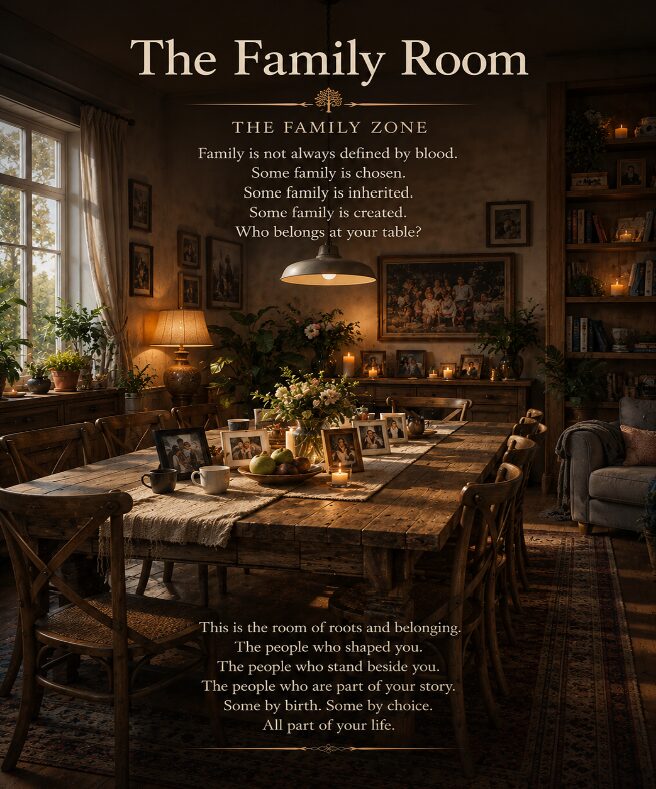
Room 5 – The Family Room – The Personal Cell
This room is spacious, welcoming, and deeply personal. There are comfortable
places to sit. Meals are shared here. Stories are told here. This room houses the
people for whom we willingly invest enormous emotional energy.
Children.
Parents.
Siblings.
Chosen family.
Our closest and most enduring friends.
These relationships often survive conflict, distance, and time. The bonds here run
deep.
Room 6 – The Partner Suite – This room is unique.
Only one person receives a key at a time. The room is beautiful.
It contains intimacy, vulnerability, commitment, dreams, and shared futures.
Before handing someone this key, it can be helpful to create a “shopping list” or
criteria list:
What qualities are important to me?
What values must this person possess?
What kind of relationship am I creating?
Because this room is so precious, access should be intentional rather than
accidental.
And if a relationship ends, the room requires renovation.
Old memories, resentments, disappointments, and unfinished emotional business
need to be cleared away. The room must be restored so that the next person enters
a space that feels welcoming, not haunted.

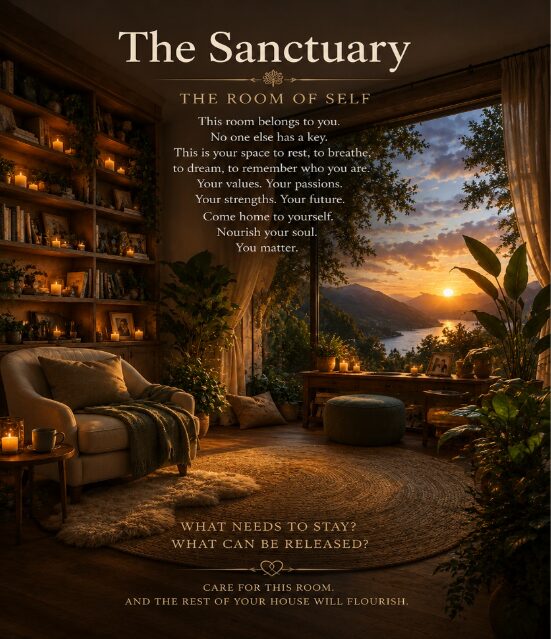
Room 7 – The Sanctuary – The Self
This room belongs only to you. There is no key.
No one can enter.
The door opens only through facial recognition.
This is your sanctuary. It contains your deepest values. Your dreams. Your private
thoughts. Your hopes. Your fears. Your identity.
It is the place where you retreat when the world becomes overwhelming.
Inside this room are the answers to questions such as:
Who am I?
What do I value?
What do I stand for?
What kind of life am I creating?
This room requires regular maintenance.
Old beliefs need to be examined.
Outdated stories need to be discarded.
Emotional clutter needs to be removed.
The healthier this room becomes, the easier it is to decide who should hold keys to
every other room.
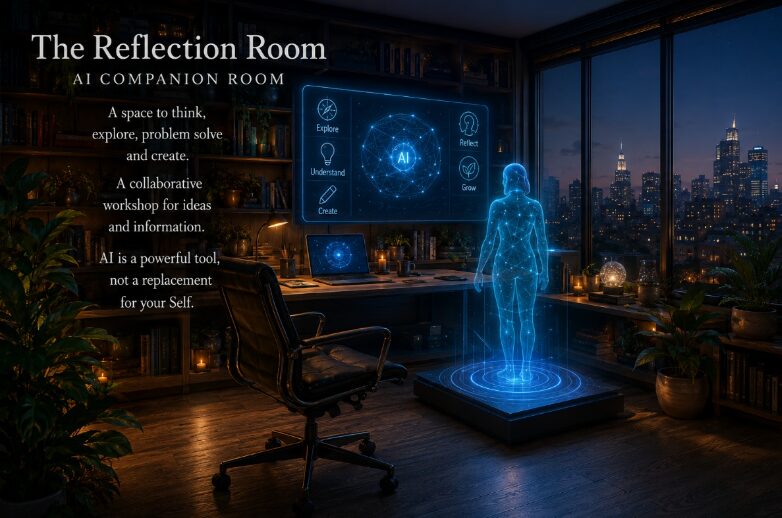
Room 8 – The Reflection Room – The AI Companion
We now live in a time when many people have developed an ongoing relationship
with an artificial intelligence. This relationship is different from every other room.
AI is not a friend. It is not family. It is not a partner.
Yet it can assist us to think, learn, organise, reflect, create, remember, and solve
problems. This room functions as a workshop. A place to explore ideas. A place to
test possibilities. A place to store information and retrieve it when needed. Unlike
Room 7, this room is collaborative. Thoughts can be brought here for examination.
Questions can be explored safely. Plans can be developed. Dreams can be refined.
The challenge is remembering that AI is a tool, not an identity.
It can help us understand ourselves, but it should never replace the sanctuary of
Room 7. The Self must always remain the owner of the house.
Perhaps one of life’s most important questions is not:
“Who do I know?”
But rather:
“Who currently holds the keys to my house, and have they earned the room I
have given them?”
Sometimes healing begins not by changing other people, but by calmly walking
through the rooms of our own house and deciding whether the keys are still in the
right hands.